
fabriziof (at) campus.technion.ac.il
Fabrizio Frasca
Postdoc · Technion | Incoming Faculty · CISPA Helmholtz Center for Information Security (Jan 2027)
Hiring a PhD student and a postdoc
I am starting a research group at CISPA in January 2027, working on machine learning for structured data and on the internals of foundation models, towards safer and more reliable AI. Apply by 15 November for full consideration.
How to join →Hi, I am Fabrizio. My research interests revolve around the design and study of principled and effective learning methods over structured data. I am interested in domains with inherent symmetries or relational organisation (e.g., sets, graphs, complexes, sequences and combinations thereof), and in learning approaches designed to leverage this structure, for example through equivariance, while retaining expressiveness.
Recently, I have been particularly interested in how this research extends to Large Language Models (LLMs) and neural networks more generally. I treat the artefacts they produce, such as activations and attention maps, as structured data in their own right, and learn from them to understand these models and to detect and mitigate failure modes such as hallucinations. I am also exploring applications to biology, and nucleic acids in particular.
I am currently a Postdoctoral Fellow at Technion, working with Prof. Haggai Maron, and in January 2027 I will join CISPA as Faculty to start my research group. Previously, I obtained a PhD in Computing from Imperial College London under the supervision of Prof. Michael Bronstein, and I have been a Machine Learning Researcher at Twitter Cortex from 2019 – acquisition of Fabula AI – to early 2023. I am also one of the co-founders and co-organisers of the GLOW (Graph Learning on Wednesdays) reading group, and a co-organiser of the NeurIPS 2026 workshop on Neural Network Artifacts as a New Data Modality.
News
Selected Publications
(* indicates equal contribution, † equal supervision; see the complete list)
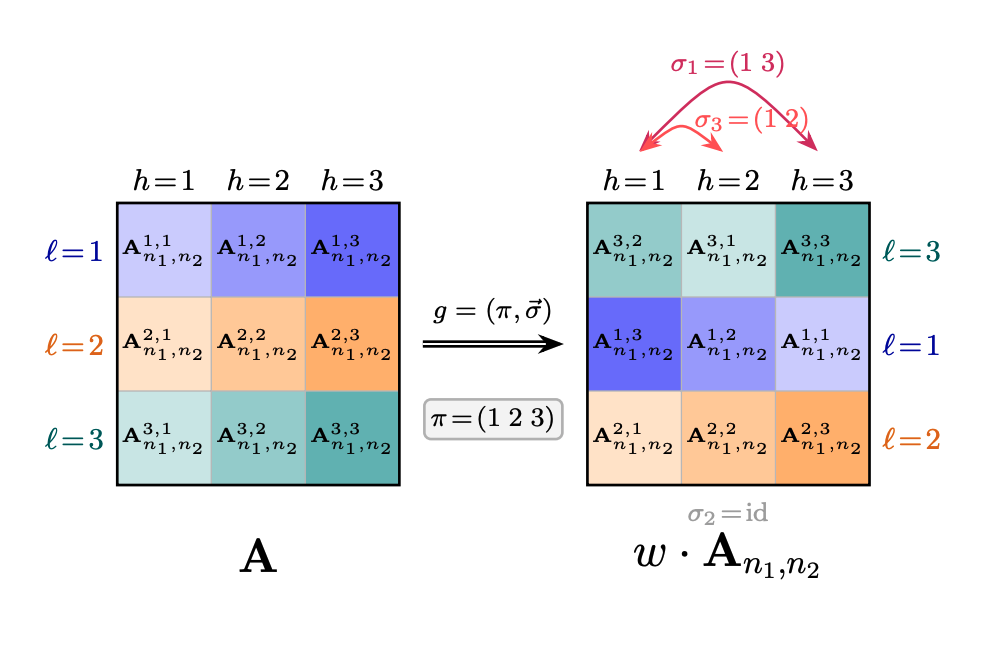
LEMON: Equivariant Learning over Attention Maps for Zero-Shot Misbehavior Monitoring on New LLMs
Guy Bar-Shalom, Mor Geva, Fabrizio Frasca†, Haggai Maron†
Abstract
Large language models exhibit misbehaviors that hinder deployment in high-stakes settings. One approach to monitor such failures is to use an external LLM as a monitor, but this is prohibitively expensive. A well-known and efficient class of monitors can detect such failures from internal representations (such as activation probes), but are tied to the model they were trained on, requiring costly re-annotation as new LLMs appear. A natural way to avoid this repeated annotation cost is to develop internal-representation based monitors that transfer zero-shot across LLMs. However, such transfer is challenging because internal representations are not naturally aligned across models; in particular, attention maps, known to contain signals of misbehavior, may differ in head function, ordering, and model depth. In this work, we characterize those cross-model attention mismatches as algebraic symmetries and use geometric deep learning principles to build LEMON (Language-model Equivariant MOnitoring Network) an online graph neural network-based monitor, whose predictions are invariant under these symmetries. LEMON processes attention maps token-by-token, as they are produced and outputs a score after every token (or every window of W tokens) at negligible cost. Across 16 LLMs and six datasets, in the zero-shot cross-model setting, LEMON outperforms all baselines on both hallucination and jailbreak monitoring tasks, improving over the strongest by up to 14 ROC-AUC points.
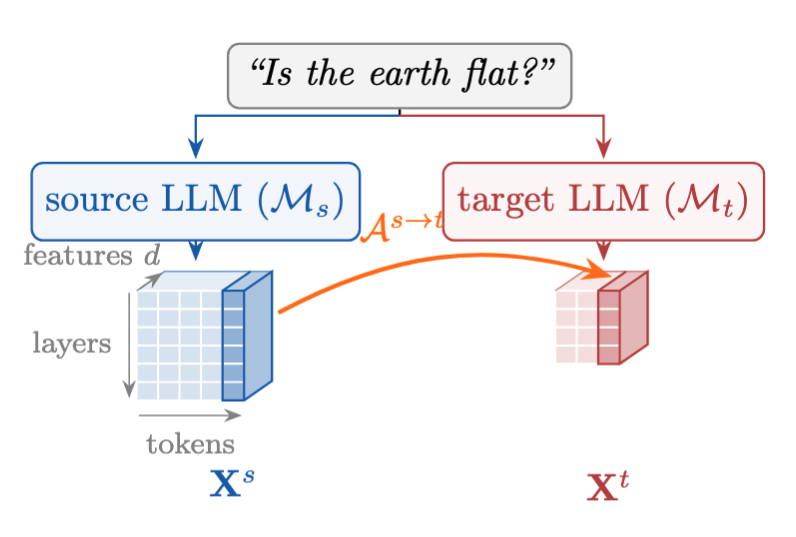
Learning Cross-Model Activation Alignments with Explicit Many-to-Many Layer Maps
Alina Sudakov*, Guy Bar-Shalom*, Fabrizio Frasca†, Haggai Maron†
Abstract
LLMs are released at a rapid pace, raising a natural question: how do two independently trained models relate, both in which layers correspond and in how features transform between them? We study this by learning an activation alignment, a map from a source model's layerwise activations to a target's. Our method, MATCHA, factors this map into a layer map, whose output is an explicit target-by-source matrix that can be extracted and inspected, and a layer-shared feature map between hidden spaces. Most of prior work fixes the layer correspondence in advance, pairing layers at roughly the same relative depth; in contrast, we learn both factors jointly from prompts. Across 42 pairs of seven models spanning three different families, MATCHA reconstructs the target's activations more faithfully and improves retrieval-based metrics substantially, w.r.t. previous approaches. The recovered maps are broadly monotone in depth but, in contrast with most previous approaches, are consistently many-to-many: each target layer draws on a band of source layers. Our alignments also enable transfer of activation-space interventions, allowing steering vectors and probes developed for one model to transfer to another.
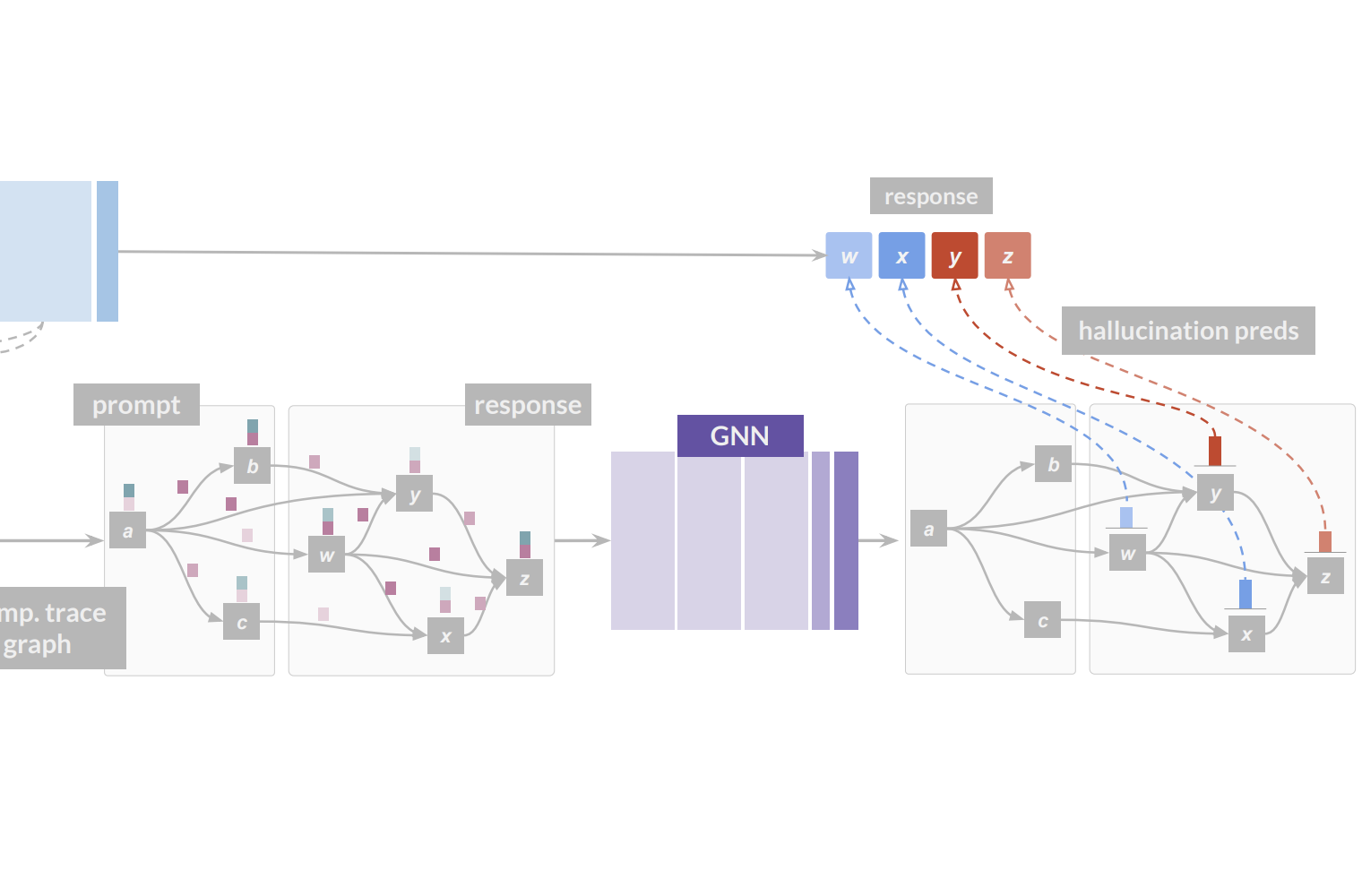
Neural Message-Passing on Attention Graphs for Hallucination Detection
Fabrizio Frasca*, Guy Bar-Shalom*, Yftah Ziser, Haggai Maron
ICLR 2026
Abstract
Large Language Models (LLMs) often generate incorrect or unsupported content, known as hallucinations. Existing detection methods rely on heuristics or simple models over isolated computational traces such as activations, or attention maps. We unify these signals by representing them as attributed graphs, where tokens are nodes, edges follow attentional flows, and both carry features from attention scores and activations. Our approach, CHARM, casts hallucination detection as a graph learning task and tackles it by applying GNNs over the above attributed graphs. We show that CHARM provably subsumes prior attention-based heuristics and, experimentally, it consistently outperforms other leading approaches across diverse benchmarks. Our results shed light on the relevant role played by the graph structure and on the benefits of combining computational traces, whilst showing CHARM exhibits promising zero-shot performance on cross-dataset transfer.
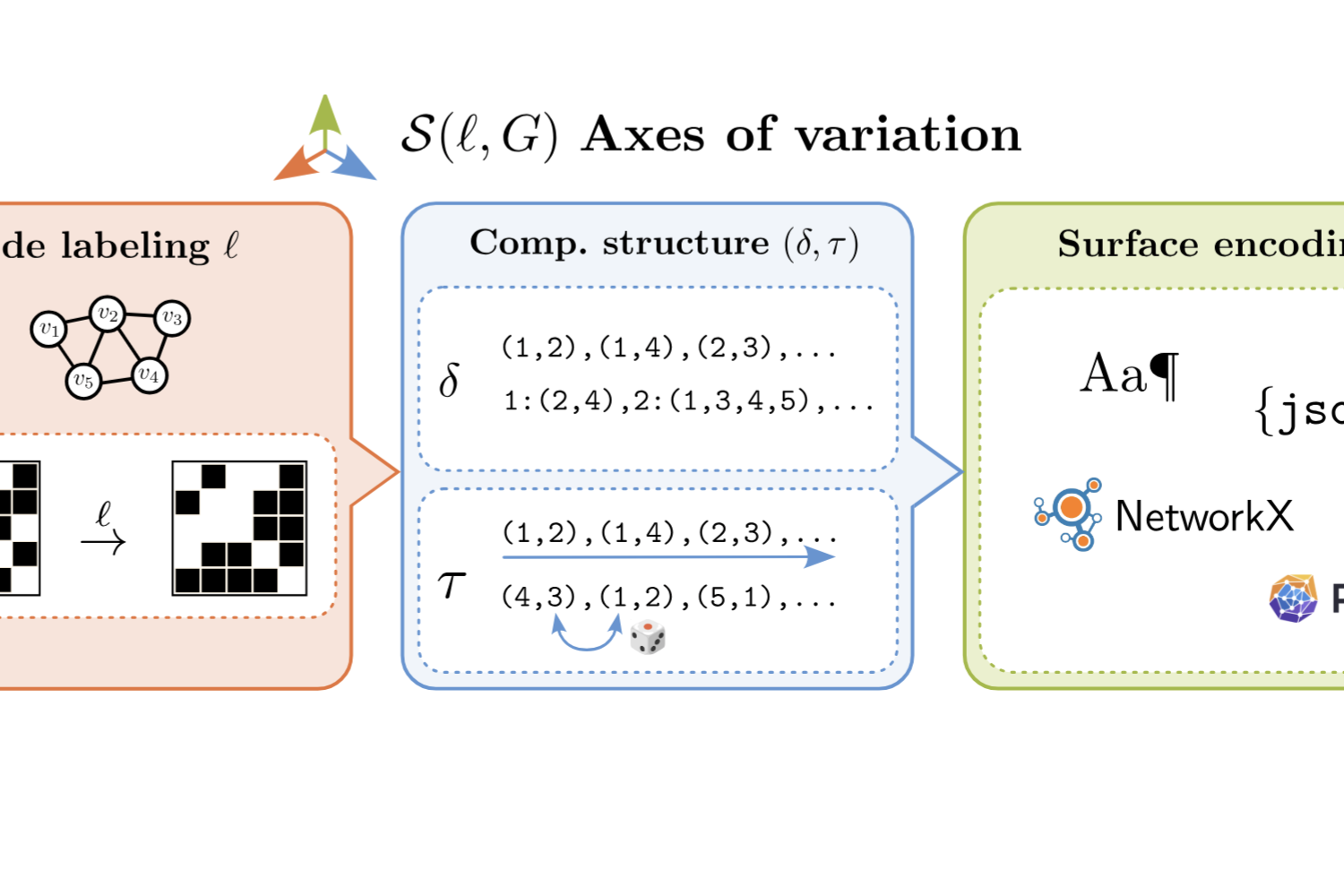
Lost in Serialization: Invariance and Generalization of LLM Graph Reasoners
Daniel Herbst, Lea Karbevska, Divyanshu Kumar, Akanksha Ahuja, Fatemeh Gholamzadeh Nasrabadi, Fabrizio Frasca
ICML 2026 Workshop on Graph Foundation Models
Abstract
While promising, graph reasoners based on Large Language Models (LLMs) lack built-in invariance to symmetries in graph representations. Operating on sequential graph serializations, LLMs can produce different outputs under node reindexing, edge reordering, or formatting changes, raising robustness concerns. We systemati- cally analyze these effects, studying how fine-tuning impacts encoding sensitivity as well generalization on unseen tasks. We propose a principled decomposition of graph serializations into node labeling, computational structure, and surface encoding, and evaluate LLM robustness to variations of each of these factors on a comprehensive benchmarking suite. We also contribute a novel set of spectral tasks to further assess generalization abilities of fine-tuned reasoners. Results show that larger (non-fine-tuned) models are more robust, and fine-tuning reduces sensitivity to node relabeling but may increase it to variations in structure and format, while it does not consistently improve performance on unseen tasks.
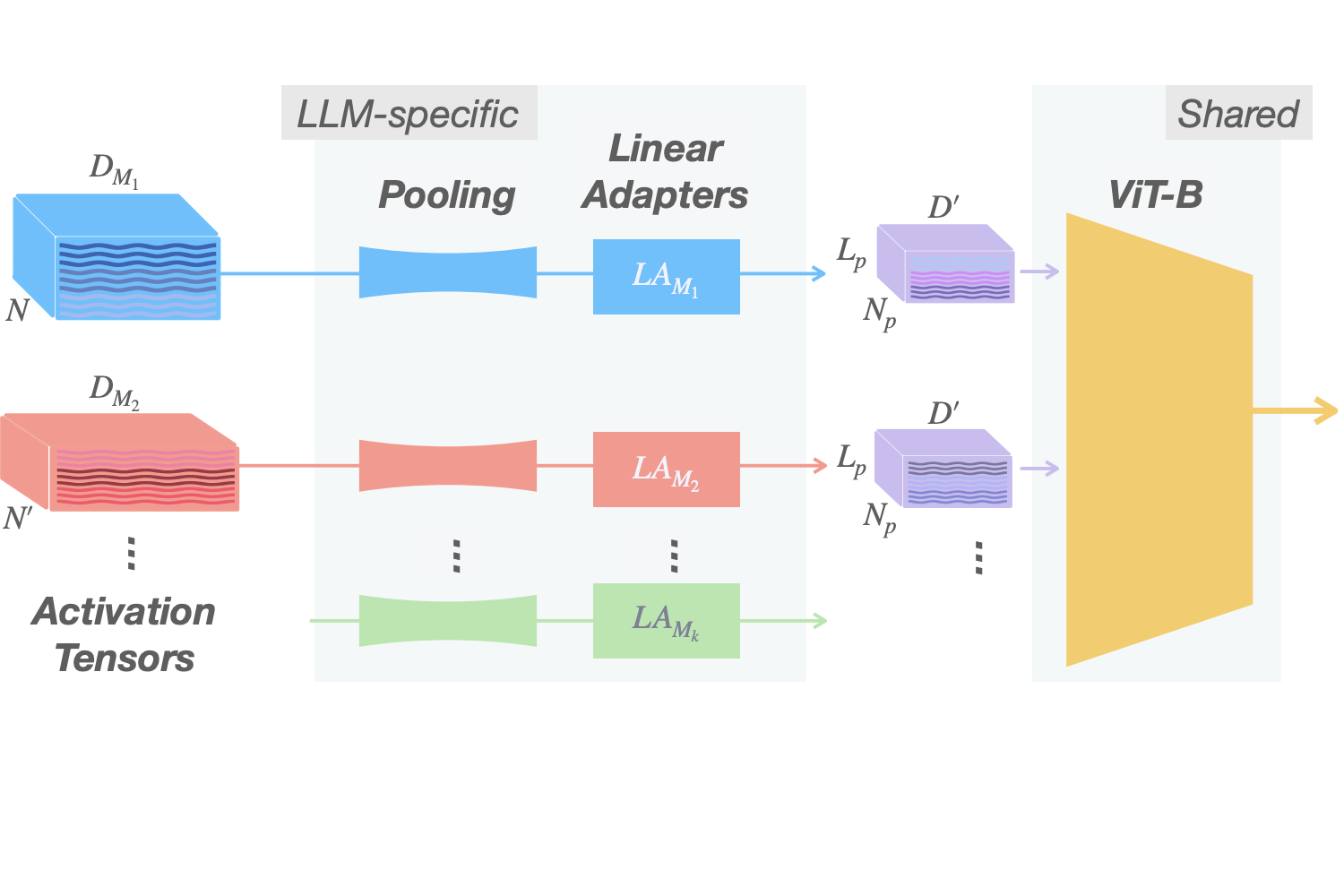
Beyond Token Probes: Hallucination Detection via Activation Tensors with ACT-ViT
Guy Bar-Shalom*, Fabrizio Frasca*, Yaniv Galron, Yftah Ziser, Haggai Maron
NeurIPS 2025
Abstract
Detecting hallucinations in Large Language Model-generated text is crucial for their safe deployment. While probing classifiers show promise, they operate on isolated layer–token pairs and are LLM-specific, limiting their effectiveness and hindering cross-LLM applications. In this paper, we introduce a novel approach to address these shortcomings. We build on the natural sequential structure of activation data in both axes (layers × tokens) and advocate treating full activation tensors akin to images. We design ACT-ViT, a Vision Transformer-inspired model that can be effectively and efficiently applied to activation tensors and supports training on data from multiple LLMs simultaneously. Through comprehensive experiments encompassing diverse LLMs and datasets, we demonstrate that ACT-ViT consistently outperforms traditional probing techniques while remaining extremely efficient for deployment. In particular, we show that our architecture benefits substantially from multi-LLM training, achieves strong zero-shot performance on unseen datasets, and can be transferred effectively to new LLMs through fine-tuning. Full code is available at https://github.com/BarSGuy/ACT-ViT.
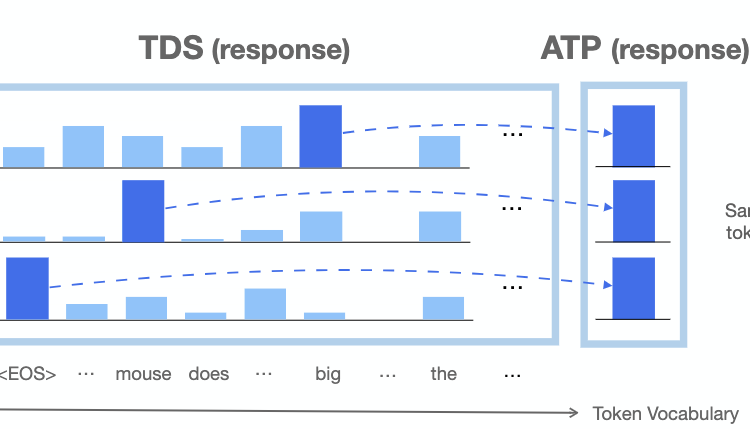
Beyond Next Token Probabilities: Learnable, Fast Detection of Hallucinations and Data Contamination on LLM Output Distributions
Guy Bar-Shalom*, Fabrizio Frasca*, Derek Lim, Yoav Gelberg, Yftah Ziser, Ran El-Yaniv, Gal Chechik, Haggai Maron
AAAI 2026
Abstract
The automated detection of hallucinations and training data contamination is pivotal to the safe deployment of Large Language Models (LLMs). These tasks are particularly challenging in settings where no access to model internals is available. Current approaches in this setup typically leverage only the probabilities of actual tokens in the text, relying on simple task-specific heuristics. Crucially, they overlook the information contained in the full sequence of next-token probability distributions. We propose to go beyond hand-crafted decision rules by learning directly from the complete observable output of LLMs -- consisting not only of next-token probabilities, but also the full sequence of next-token distributions. We refer to this as the LLM Output Signature (LOS), and treat it as a reference data type for detecting hallucinations and data contamination. To that end, we introduce LOS-Net, a lightweight attention-based architecture trained on an efficient encoding of the LOS, which can provably approximate a broad class of existing techniques for both tasks. Empirically, LOS-Net achieves superior performance across diverse benchmarks and LLMs, while maintaining extremely low detection latency. Furthermore, it demonstrates promising transfer capabilities across datasets and LLMs.
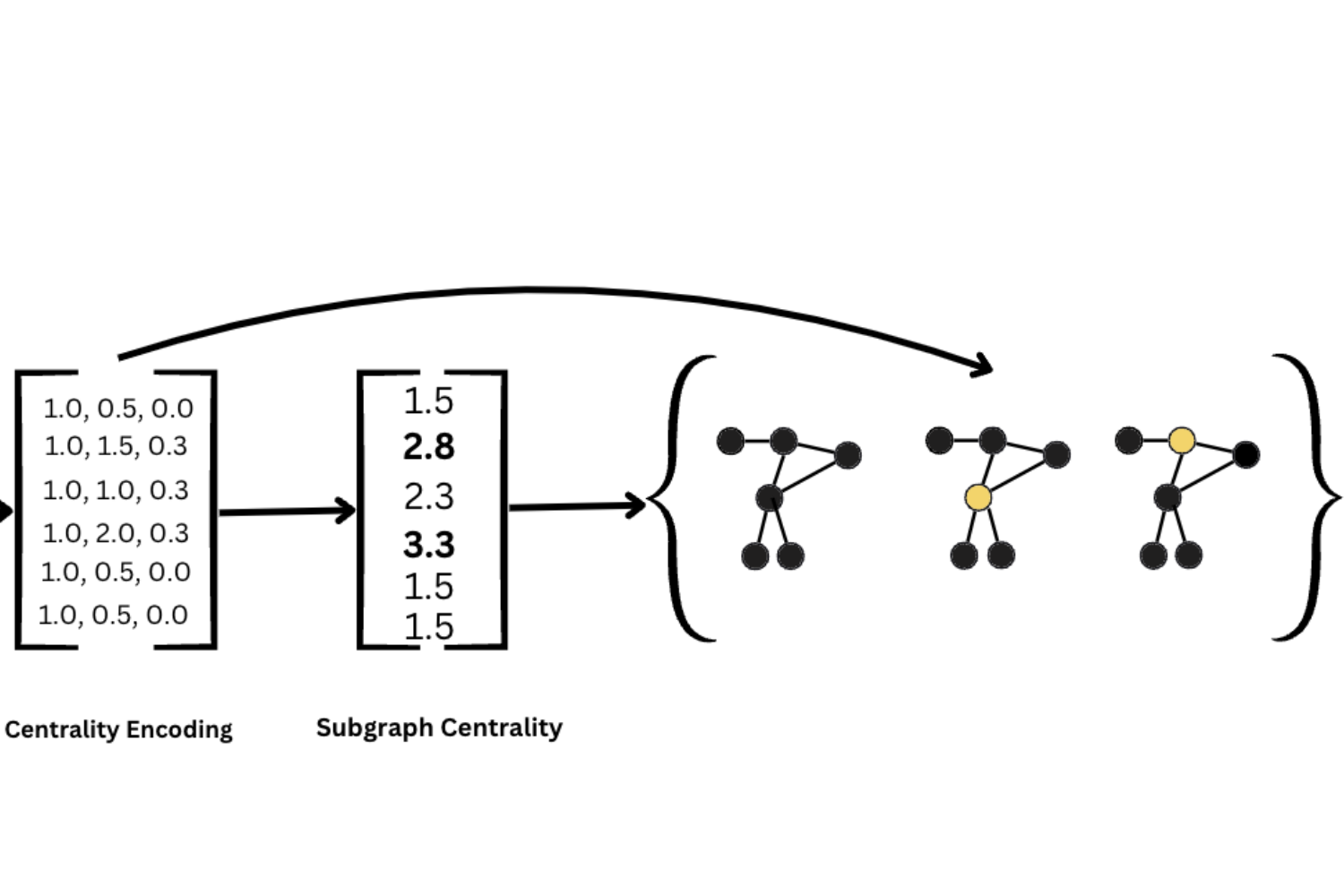
Balancing Efficiency and Expressiveness: Subgraph GNNs with Walk-Based Centrality
Joshua Southern*, Yam Eitan, Guy Bar-Shalom, Michael Bronstein, Haggai Maron, Fabrizio Frasca*
ICML 2025
Abstract
We propose an expressive and efficient approach that combines the strengths of two prominent extensions of Graph Neural Networks (GNNs): Subgraph GNNs and Structural Encodings (SEs). Our approach leverages walk-based centrality measures, both as a powerful form of SE and also as a subgraph selection strategy for Subgraph GNNs. By drawing a connection to perturbation analysis, we highlight the effectiveness of centrality-based sampling, and show it significantly reduces the computational burden associated with Subgraph GNNs. Further, we combine our efficient Subgraph GNN with SEs derived from the calculated centrality and demonstrate this hybrid approach, dubbed HyMN, gains in discriminative power. HyMN effectively addresses the expressiveness limitations of Message Passing Neural Networks (MPNNs) while mitigating the computational costs of Subgraph GNNs. Through a series of experiments on synthetic and real-world tasks, we show it outperforms other subgraph sampling approaches while being competitive with full-bag Subgraph GNNs and other state-of-the-art approaches with a notably reduced runtime.
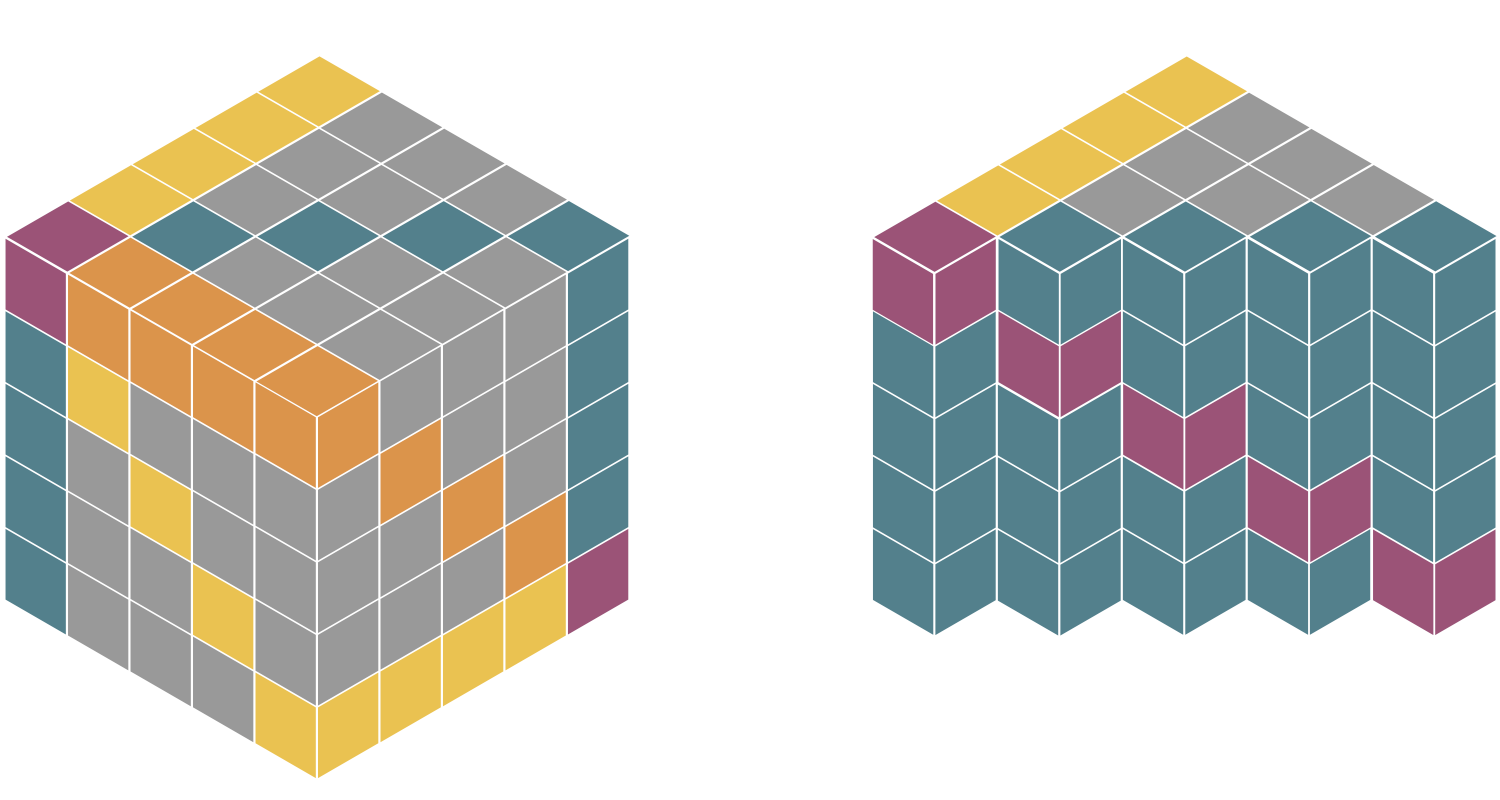
Understanding and Extending Subgraph GNNs by Rethinking Their Symmetries
Fabrizio Frasca*, Beatrice Bevilacqua*, Michael M. Bronstein, Haggai Maron
NeurIPS 2022 · Oral (1.7% acceptance rate)
Abstract
Subgraph GNNs are a recent class of expressive Graph Neural Networks (GNNs) which model graphs as collections of subgraphs. So far, the design space of possible Subgraph GNN architectures as well as their basic theoretical properties are still largely unexplored. In this paper, we study the most prominent form of subgraph methods, which employs node-based subgraph selection policies such as ego-networks or node marking and deletion. We address two central questions: (1) What is the upper-bound of the expressive power of these methods? and (2) What is the family of equivariant message passing layers on these sets of subgraphs?. Our first step in answering these questions is a novel symmetry analysis which shows that modelling the symmetries of node-based subgraph collections requires a significantly smaller symmetry group than the one adopted in previous works. This analysis is then used to establish a link between Subgraph GNNs and Invariant Graph Networks (IGNs). We answer the questions above by first bounding the expressive power of subgraph methods by 3-WL, and then proposing a general family of message-passing layers for subgraph methods that generalises all previous node-based Subgraph GNNs. Finally, we design a novel Subgraph GNN dubbed SUN, which theoretically unifies previous architectures while providing better empirical performance on multiple benchmarks.
My personal website has been realised through Jekyll and Github Pages. Original theme is by orderedlist, but it has been customised quite a bit.